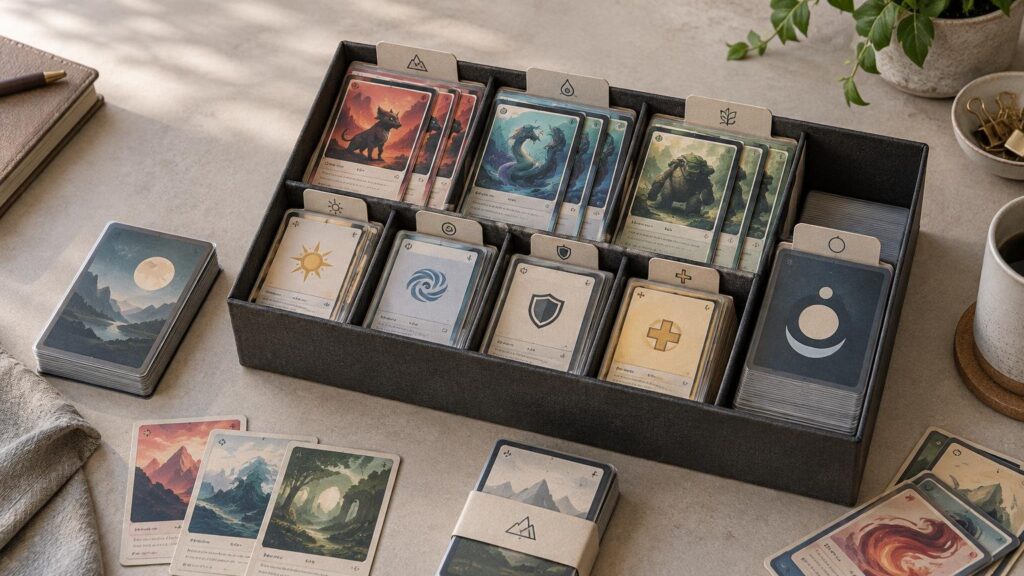
How to Organize a Pokémon Collection for Playing Instead of Collecting
Turn a Pokémon card collection into a working deckbuilding library organized around playable sets, Trainer roles, evolution lines, Energy, rotation, and deck shells.
Turn a Pokémon card collection into a working deckbuilding library organized around playable sets, Trainer roles, evolution lines, Energy, rotation, and deck shells.
A promising card game still needs understandable rules, available opponents, sensible costs, dependable products and enough fun to justify another match.
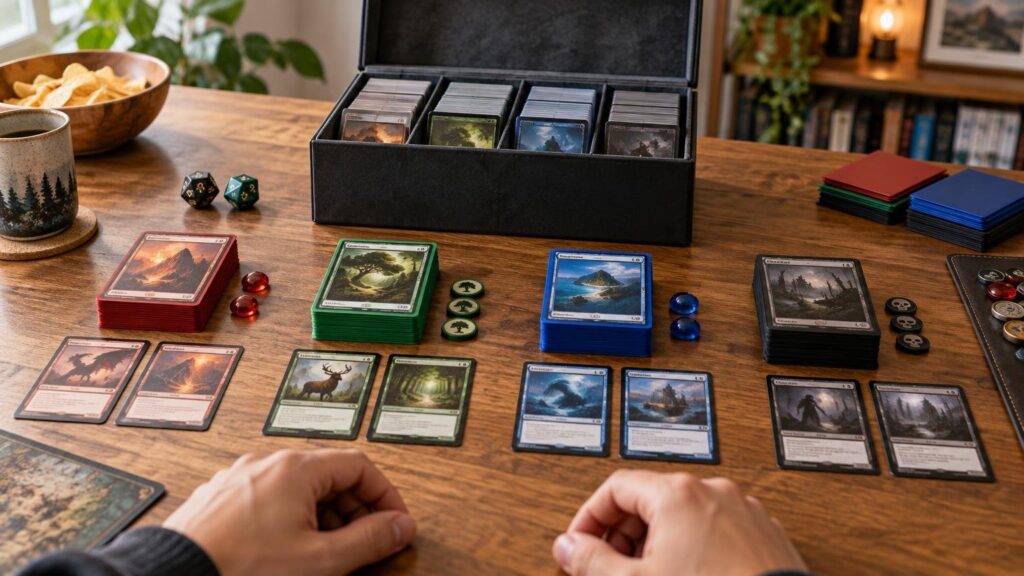
A practical guide to building several balanced, ready-to-play TCG decks so friends can sit down, choose a play style, and start playing immediately.
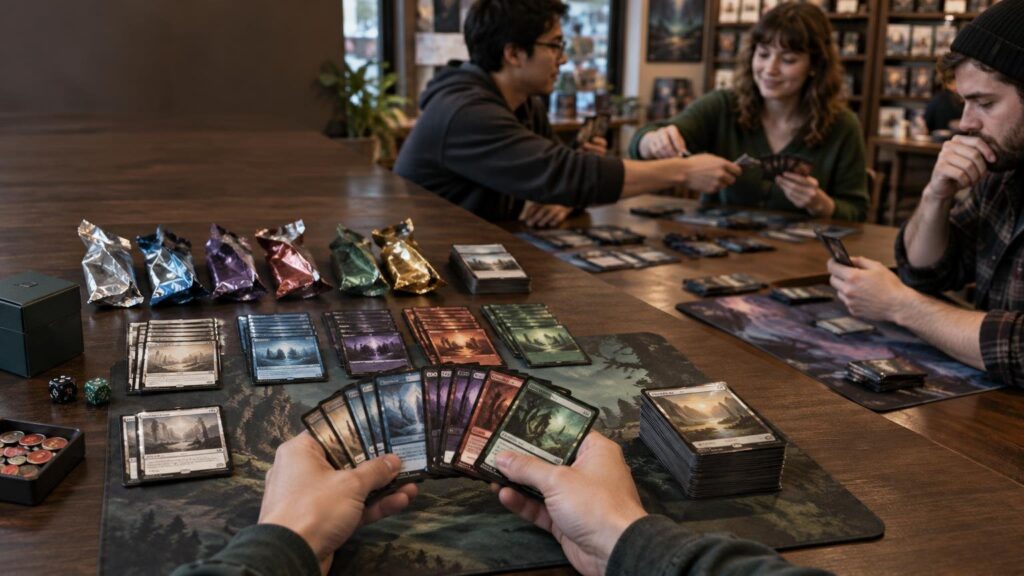
Sealed removes the pick-and-pass pressure of Draft, making it the easier introduction to Limited for most players. Here is how the formats compare and when a beginner might still prefer Draft.
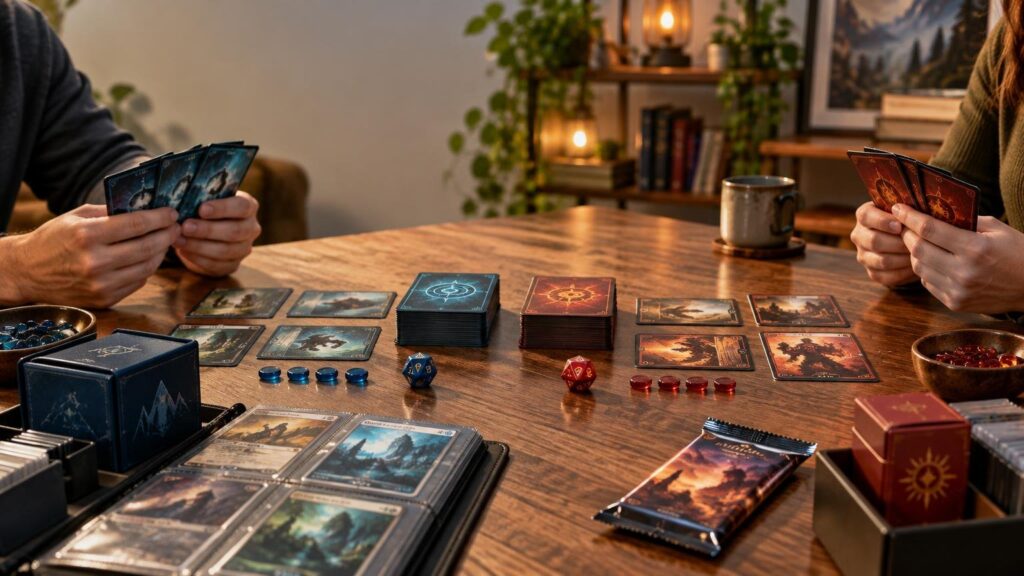
A good TCG starter product teaches through play, supplies coherent decks and remains useful after the tutorial. Here is how to tell a real introduction from a disposable demo.
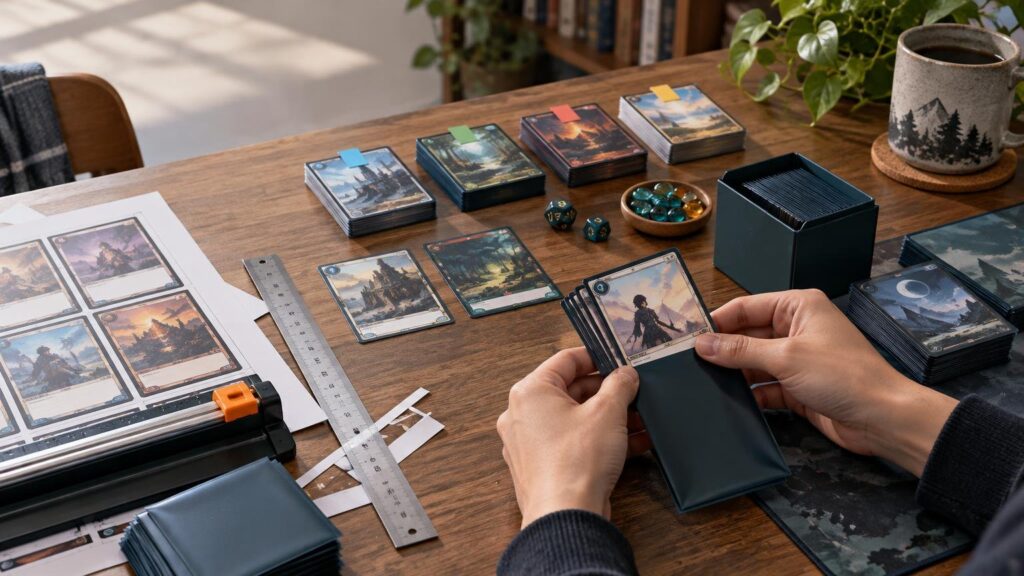
A player-first workflow for assembling Grand Archive playtest decks, printing readable proxies and turning casual games into useful deckbuilding decisions.
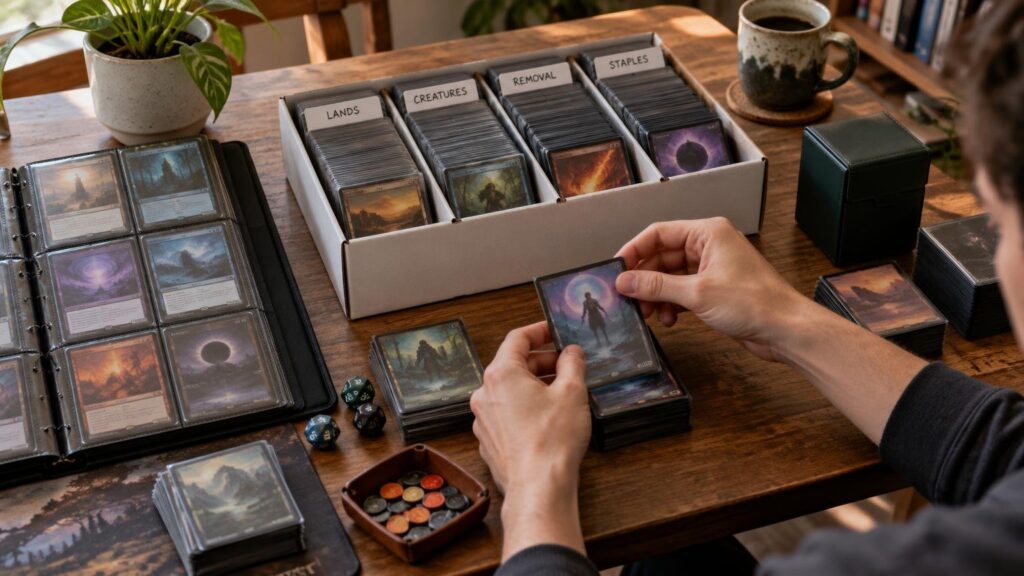
A practical collection system built around finding playable cards, assembling decks, and returning everything to the right place.
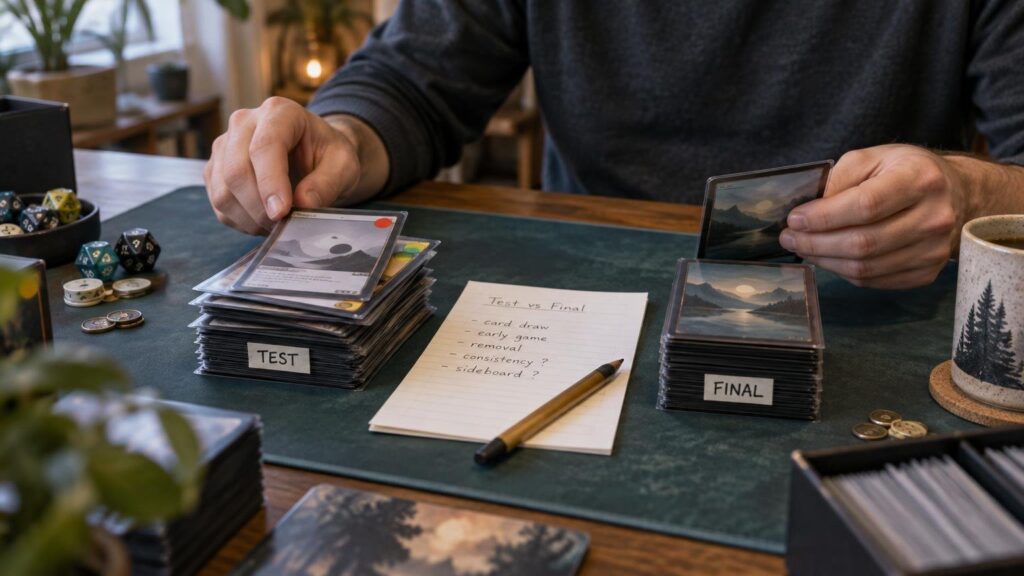
Altered proxies are the flexible choice for testing an exact deck list, while Legacy Print-on-Demand is better suited to durable cards and broader set access.
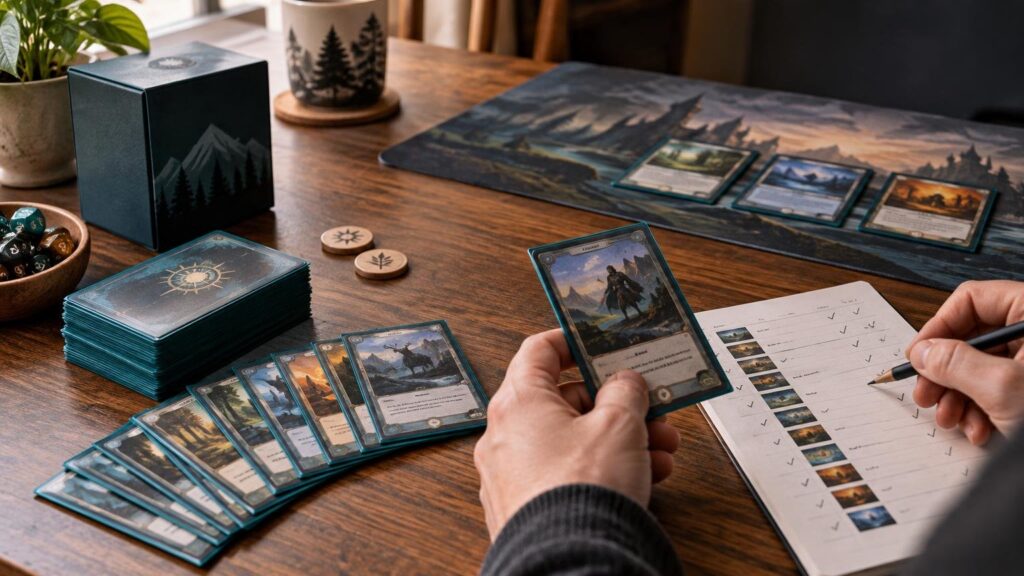
A practical guide to recreating a known KeyForge deck for casual testing without confusing deck reproduction with unrestricted deck construction.
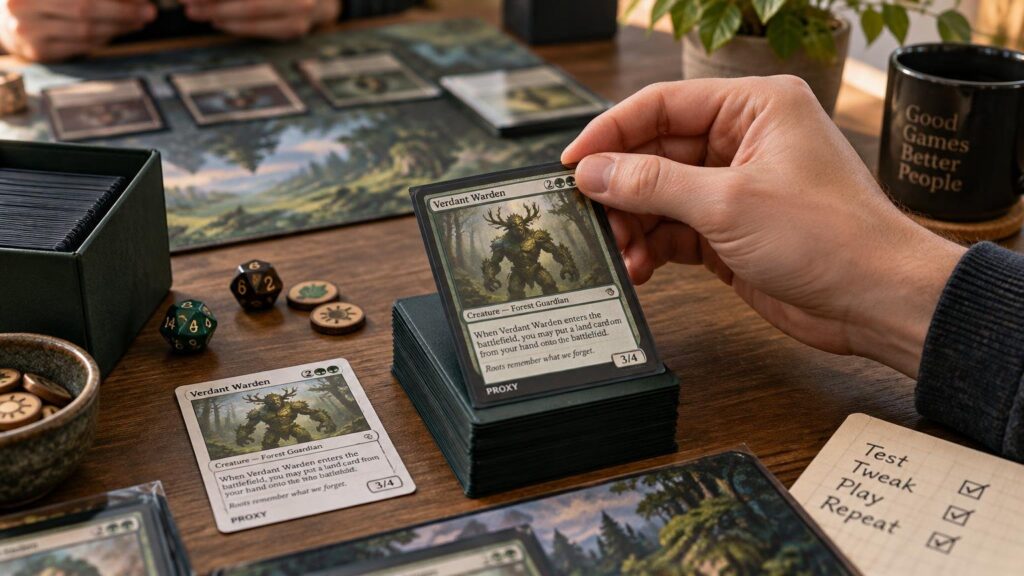
A good MTG proxy is easy to identify, easy to read and physically consistent with the rest of the deck. Here is what matters once the cards reach the table.